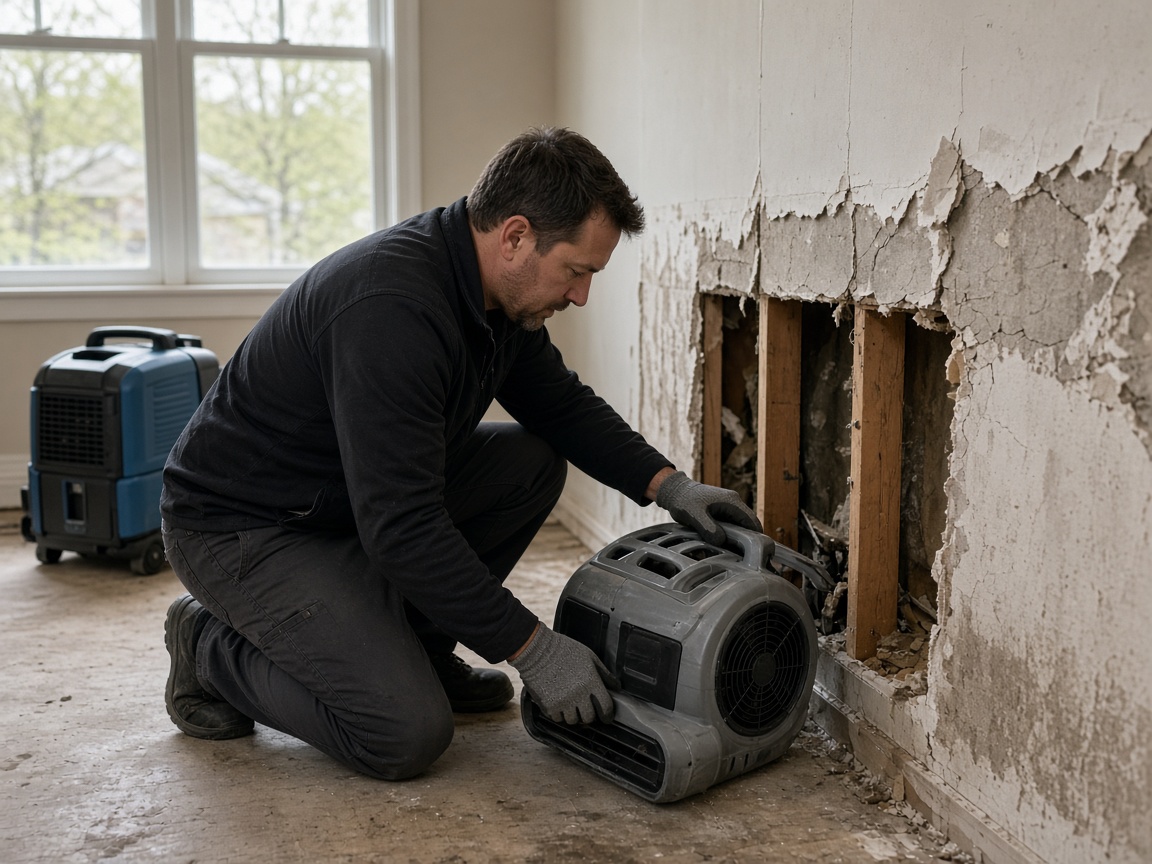
In Spring, where our humid subtropical climate means moisture is always a concern, effective structural drying is paramount after any water intrusion. Whether it's a pipe burst in an older home in Old Town Spring or a storm-related leak affecting a property in Imperial Oaks, the goal isn't just to remove visible water, but to extract moisture from every building material. This includes framing, subflooring, drywall, and insulation, all of which can absorb significant amounts of water. Our process accounts for the common building materials found across Harris County, from the older wood-frame construction to newer developments, ensuring that hidden moisture pockets don't lead to long-term issues like mold growth or structural compromise. We focus on restoring the integrity of your property, preventing secondary damage that can be more costly and complex to address down the line.
The challenge of structural drying in a region like Spring, nestled between Houston and The Woodlands, is often compounded by our high humidity. Simply airing out a property isn't enough; specialized equipment like industrial-grade dehumidifiers and air movers are essential to create the optimal drying environment. We carefully monitor moisture levels in materials using professional meters, ensuring that drying targets are met according to industry standards. This meticulous approach is critical for properties near the Spring Creek Greenway, where natural humidity levels can be higher. Our team understands the local construction nuances and how different materials, from typical gypsum board to denser concrete slabs, react to moisture and require specific drying protocols to prevent warping, cracking, or deterioration.
Effective structural drying isn't just about speed; it's about precision. We develop a tailored drying plan for each property, considering the type of water damage, the affected materials, and the extent of saturation. This might involve strategic placement of equipment to create controlled airflow, or targeted drying techniques for specific areas like crawl spaces or wall cavities. For homes in Spring Creek Oaks, where varied construction styles are common, our adaptable approach ensures every unique situation is handled effectively. Our owner-operated team provides upfront quotes, so you understand the scope of work and the process involved in bringing your property back to its pre-damage condition, focusing on workmanship you can inspect at every stage.
Beyond the visible water, the real work of structural drying in Spring involves understanding how moisture migrates and gets trapped within building assemblies. For instance, water can wick up into wall cavities from a saturated subfloor, even if the initial leak was contained to a small area. Our technicians use thermal imaging cameras to detect these hidden moisture pockets, ensuring no area is overlooked. This is especially important in our climate, where even small amounts of residual moisture can quickly lead to mold in the warm, humid conditions. We're committed to a thorough drying process that protects your investment and the health of your indoor environment, providing peace of mind to homeowners and businesses throughout Spring and the surrounding Harris County communities.
Technician insight
In Spring, the thing that catches most people out with structural drying is underestimating how quickly our humid subtropical climate can turn residual moisture into a serious mold problem, especially in older homes in Old Town Spring. Many folks think a few fans will do the trick, but without professional-grade dehumidifiers and precise moisture readings, you're just moving humid air around, leaving hidden moisture to fester in wall cavities or under subfloors.
Hidden Leak in Spring Creek Oaks Bathroom
A homeowner in Spring Creek Oaks noticed a musty smell in their bathroom, but couldn't find a visible leak. We were called to investigate and found a slow, long-term leak behind the shower wall that had saturated the drywall, subfloor, and even a portion of the wall studs. We extracted the water, removed the affected non-salvageable materials, and then set up a targeted drying system with air movers and dehumidifiers for three days. Our continuous monitoring brought all moisture levels down to acceptable standards, preventing mold and saving the homeowner from more extensive repairs.
Structural Drying Services We Offer
✓Moisture Mapping & Assessment
We use advanced moisture meters and thermal imaging to precisely map the extent of water intrusion and saturation within your property's structure, ensuring no hidden moisture is missed.
✓Targeted Dehumidification
Specialized industrial dehumidifiers are deployed to extract airborne moisture, creating the ideal dry environment to prevent mold growth and further structural damage in Spring's humid climate.
✓High-Volume Air Mover Deployment
Strategic placement of high-powered air movers accelerates evaporation from wet surfaces, targeting specific materials like subfloors, walls, and ceilings for efficient drying.
✓Cavity Drying Techniques
We employ specialized tools to inject dry air into wall cavities and other enclosed spaces, effectively drying hard-to-reach areas and preventing hidden moisture issues.
✓Hardwood Floor Drying
Dedicated equipment and techniques are used to gently and effectively dry hardwood floors, minimizing cupping, warping, and the need for costly replacement.
✓Structural Wood Drying
Our process addresses saturated wood framing, joists, and subfloors, using controlled drying to restore structural integrity and prevent long-term decay or mold.
How it works
- 1
Initial Assessment & Moisture Detection
Upon arrival at your Spring property, our team conducts a comprehensive assessment using moisture meters, thermal cameras, and hygrometers to accurately determine the scope of water damage and identify all affected structural materials.
- 2
Water Extraction & Debris Removal
We promptly remove standing water and any saturated debris or non-salvageable materials to prepare the area for effective drying, minimizing further saturation and contamination.
- 3
Equipment Setup & Controlled Drying Environment
High-capacity air movers, industrial dehumidifiers, and other specialized drying equipment are strategically placed to create a controlled drying environment, optimizing airflow and moisture removal from structural components.
- 4
Monitoring & Adjustments
Throughout the drying process, we continuously monitor moisture levels in materials and adjust equipment as needed to ensure efficient drying to industry standards, preventing over-drying or under-drying.
- 5
Final Inspection & Verification
Once target moisture levels are achieved, a final inspection is performed to verify that all structural materials are thoroughly dry, ensuring your property is restored to a safe, stable condition.
Pricing
Structural drying costs in Spring vary based on the extent of water damage, the types of materials affected, and the duration of the drying process.